
A lot of the ABATE crew want to ride their bikes to the car show today, too. As the only sidecar pilot in the chapter, I have ended up with the whole kit and caboodle.
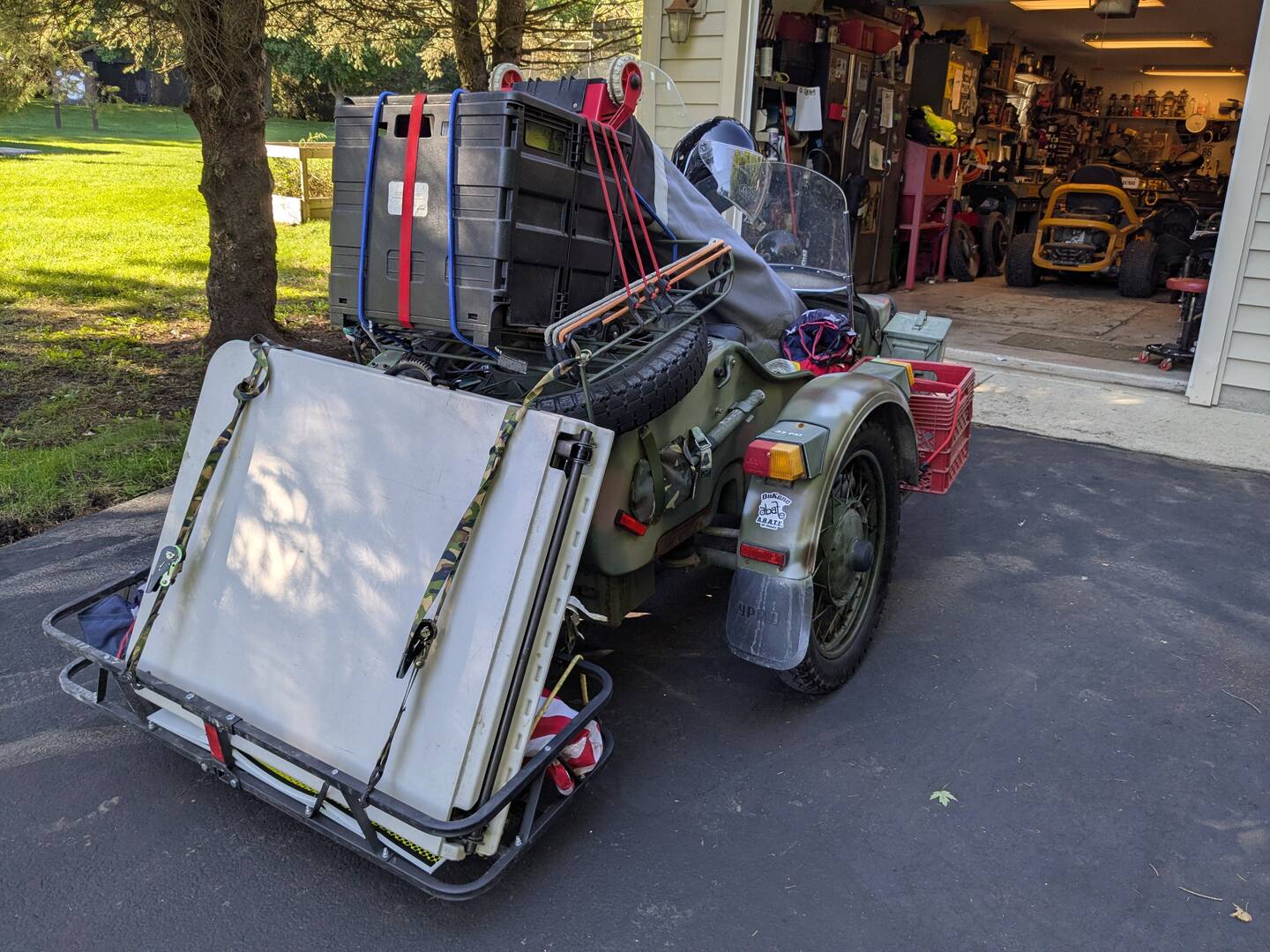
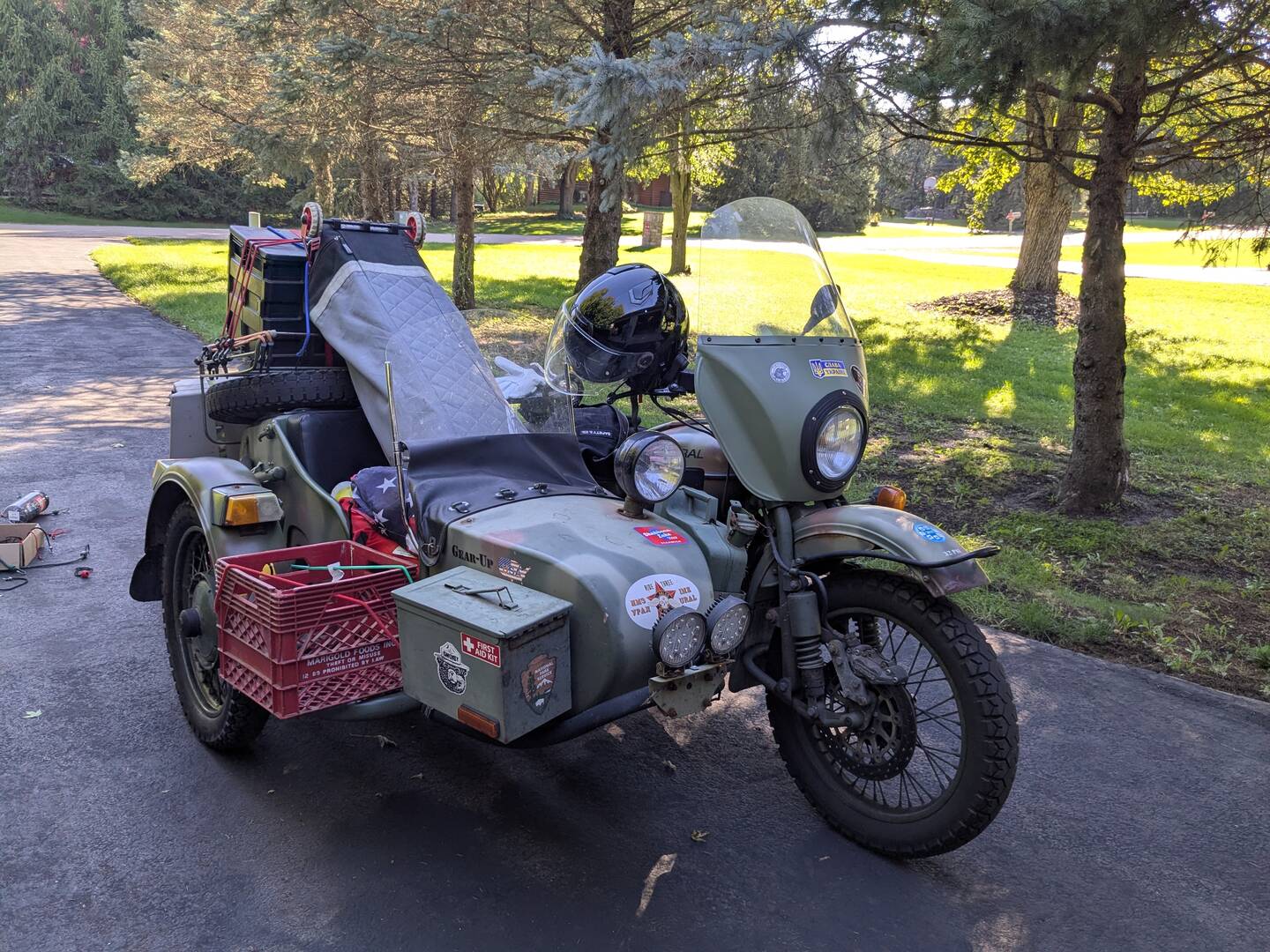
It's not the first time I've hauled all this stuff. I usually haul it 25 or 30 miles. Today, only 2 miles.

@cheesy LOVE THIS!!! If only you could take pictures of folk's expressions as they see you drive by 

@cheesy LOVE THIS!!! If only you could take pictures of folk's expressions as they pass you by

FIFY. Good thing he didn’t have far to go!
Illegitemi non carborundum est!
@cheesy LOVE THIS!!! If only you could take pictures of folk's expressions as they see you drive by
There isn't a lot of traffic on a Sunday morning where I live. The only expression I caught yesterday was verbal when I rolled onto the show grounds with the load. There is a guy that announces every show vehicle that rolls in; year, make, model, and a bit of info of the model in the company's history.
I heard, "I have no idea what the heck that is." when I rolled in.
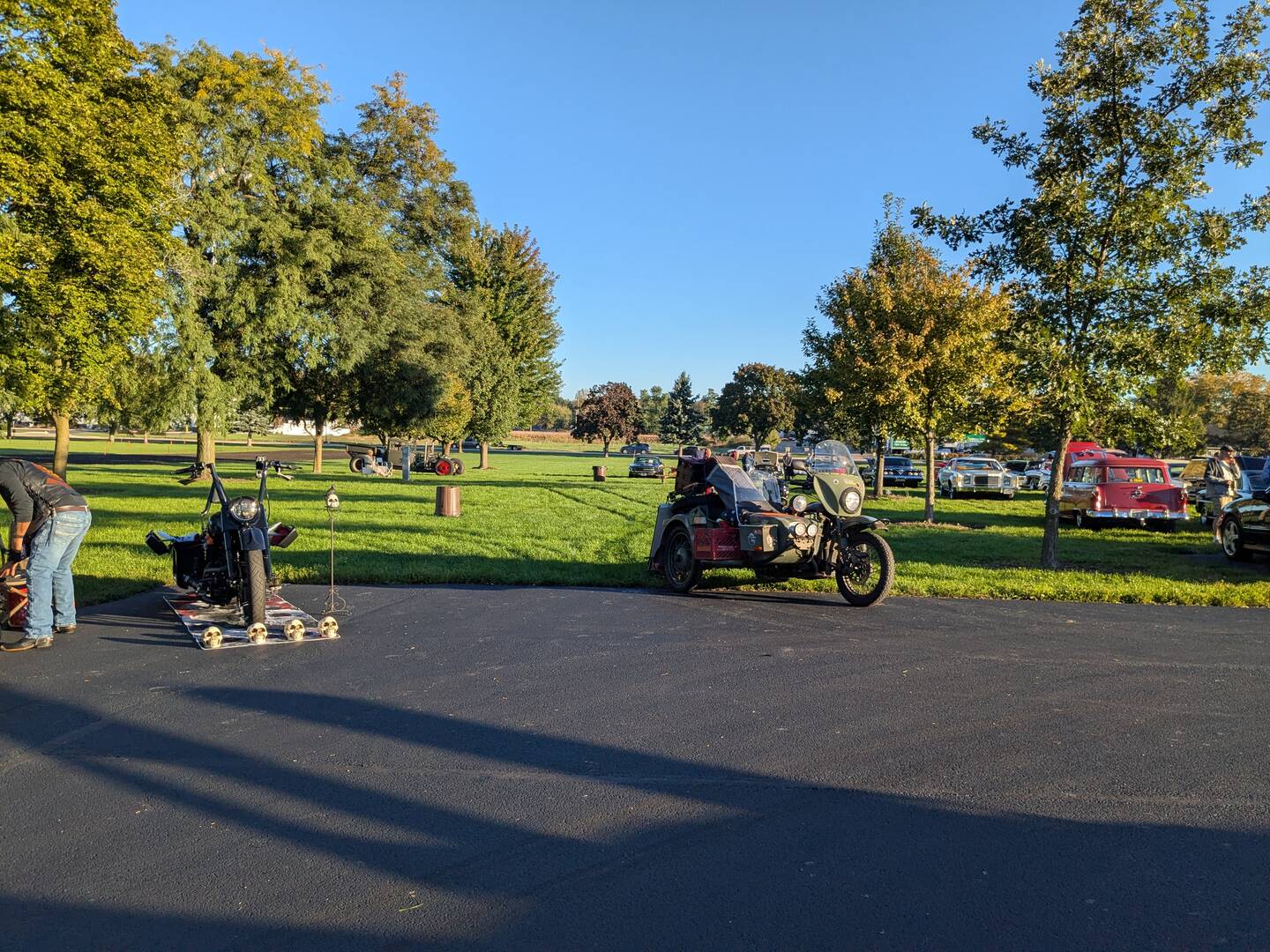
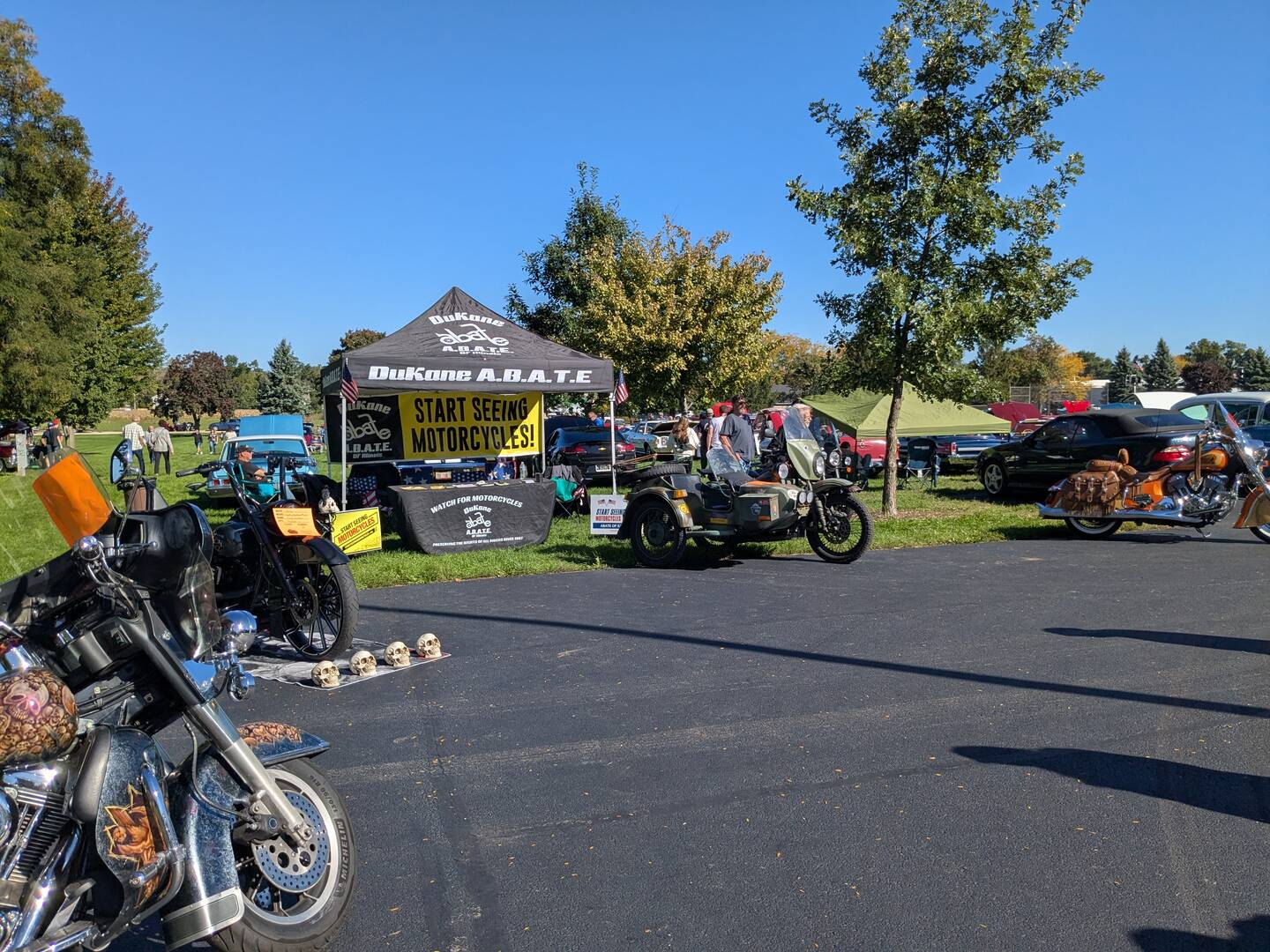
I set the whole thing up by myself but had help taking it down.
So I mentioned the DeSoto has a bum clutch and a couple 🤣 of oil leaks. Well, to even inspect the clutch, the transmission has to come out.(Thanks, Mopar)
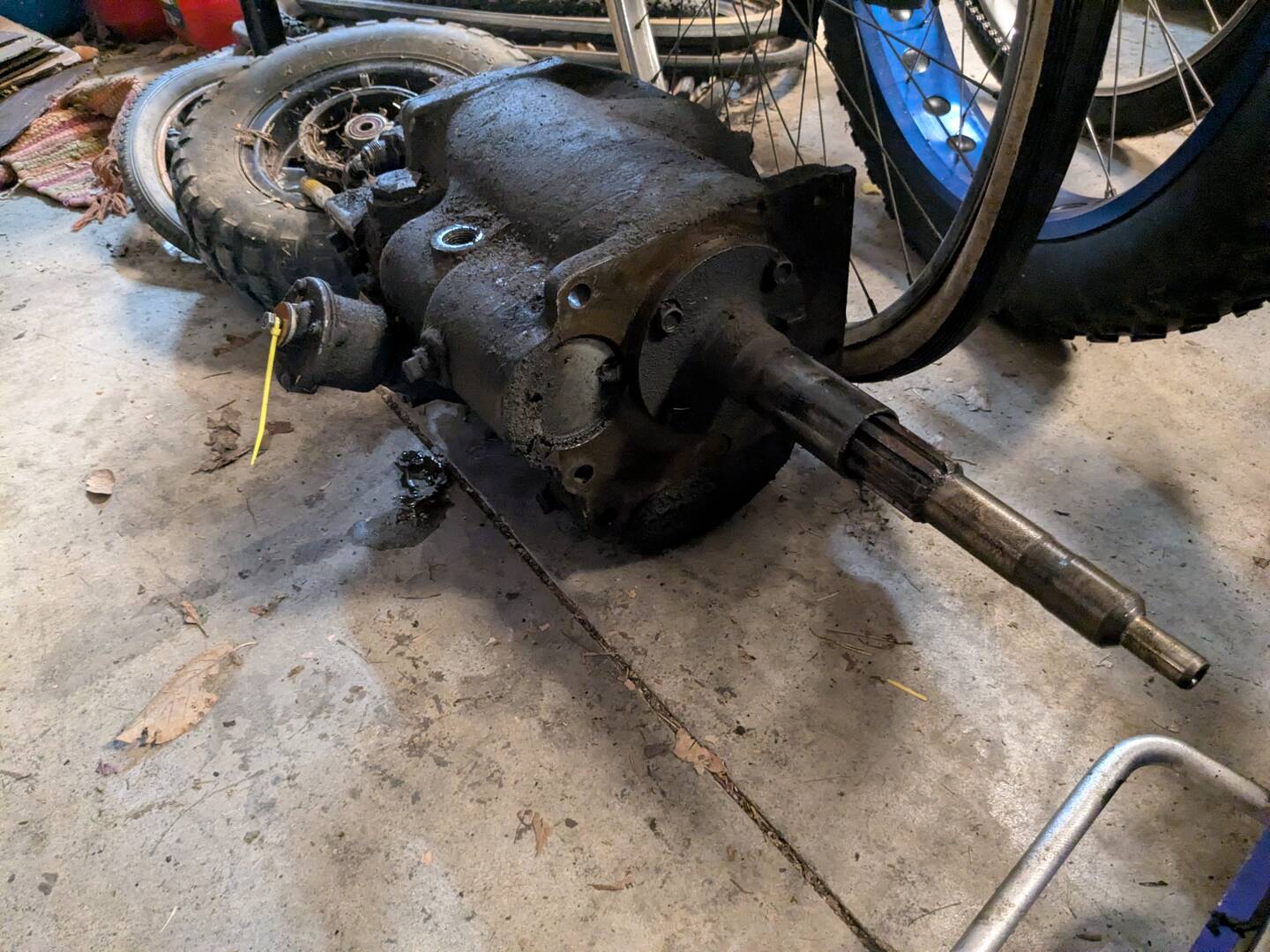
What a heavy, greasy, leaky, and weird looking thing. Under all that crud, it's silver. The clutch itself was married to the pressure plate and torque converter. I will explain the torque converter in a 1940s car. The transmission is a dual range semi-automatic, not a manual. The clutch rides on the torque converter instead of a flywheel. Benefit(?)is that the left pedal is only for the initial start, shifting between ranges, and going into reverse. Roll up to a stop sign in 4th and the transmission will drop into 3rd without touching the clutch. Just sit with a foot on the brake. Take off in 3rd, momentarily let off the gas anywhere between 12 and 30 mph, you'll hear a click. That's the transmission shifting into 4th. And on your Merry way you go.
The crud on the transmission comes from numerous places. The worst is the rear main seal. So far, the parts list consists of a clutch kit; gasket set, front main shaft bearing, and rear seal for the transmission; rear main seal and pan gasket for the engine, and a pinion shaft seal. I did call it a money pit. The car has been in the family since 1978 and my Dad says that he never touched the transmission or clutch in all that time. So a good run.
Interesting early auto trans.
You said dual range then talked about 3rd and 4th?
The basic was 3 speed manual about then.
The fancy ones had an overdrive.
Well down under and automatic were rare.
Just curious as to what their semi auto actually involved.
Interesting early auto trans.
You said dual range then talked about 3rd and 4th?
The basic was 3 speed manual about then.
The fancy ones had an overdrive.
Well down under and automatic were rare.
Just curious as to what their semi auto actually involved.
I can answer that.
Dual range, with two speeds in each range. Low range=1st and 2nd. High=3rd and 4th. More like a fancy transfer case. Shifting happens through mechanical, electrical, and hydraulic sorcery. As mentioned earlier, the normal clutch is used to shift between low and high range and into reverse. For the sorcery to happen for the automatic upshift or downshift, there is a relay, a governor with points, an interrupter switch, and an electric over hydraulic solenoid that works together.
Say you start out in 1st using the clutch. At around 8 mph, let up on the gas. The governor senses the lower input speed and the points close. An electrical signal is sent to the electric over hydraulic solenoid. The solenoid piston sends oil to a second piston which first makes contact with the interrupter switch which momentarily grounds the ignition. That takes the load off the transmission so that the piston can now move the shift fork to engage 2nd gear. Approach 20 mph, then use the clutch to shift into high range, which initially will be 4th. High range is just a second gear set that operates the same.
To get the downshift to the lower gear in either range, at around 8 mph, the governor points open, killing power to the solenoid. That relieves the hydraulic pressure on the pistons and springs help move the shift fork which moves the gears back into the lower range. No need for the clutch. At idle, the torque converter isn't spinning fast enough to affect the transmission.
There is a kick down, or passing gear, on this set up, too. That involves a switch on the carb. When floored, a signal is sent to the relay, that forces the governor points to open, forcing a downshift. Kind of exciting when the old girl picks up her skirt and sprints away with the flat head six roaring.

1941 DeSoto: Big news for this year was the addition of the Fluid Drive coupling unit and Simplimatic transmission, the first semi-automatic transmission available in a DeSoto. This combo provided smooth power with accelerator-actuated automatic shifting.
Then I guess I am lucky that my 1941 DeSoto was the low end model, 4 door, 6 passenger sedan that had a 4 speed manual transmission, rather than this high end dual range automatic transmission. Or....was it a 3 speed manual tans ? Been so long ago now, that I forget.
Two Million Mile Rider
Exploring the World in Comfort
1941 DeSoto: Big news for this year was the addition of the Fluid Drive coupling unit and Simplimatic transmission, the first semi-automatic transmission available in a DeSoto. This combo provided smooth power with accelerator-actuated automatic shifting.
Then I guess I am lucky that my 1941 DeSoto was the low end model, 4 door, 6 passenger sedan that had a 4 speed manual transmission, rather than this high end dual range automatic transmission. Or....was it a 3 speed manual tans ? Been so long ago now, that I forget.
It would have been the 3 speed. 4 speeds were usually reserved for trucks over 1/2 ton. I believe 1941 would have had the hide-away head lights. My great grandfather had a 41 and was the reason my Dad got the 48 as the 41 is just about Unobtainium.
My little 1925 Fiat could use an electric overdrive.
There's a big jump between 2nd and 3rd.
And 3rd could have more legs.
So a 2 speed 2 speed in the 41.
Sophisticated for the time.
Reminds me of the road ranger gearbox Ford I drove.
5 speed plus 3 speed splitter box.
It was an upgrade to our old island cab Ford.
Except they heat bent the gear lever which was high tensile and therefore brittle.
Of course it snapped on the freeway in peak traffic.
I was in 3rd going slow at the time with a broken stick in my hand....
OK what's the protocol here?
Eventually I worked out I was driving a 3 speed, (splitter box).
Made it ɓack to the workshop OK.